
PRP Therapy Skin
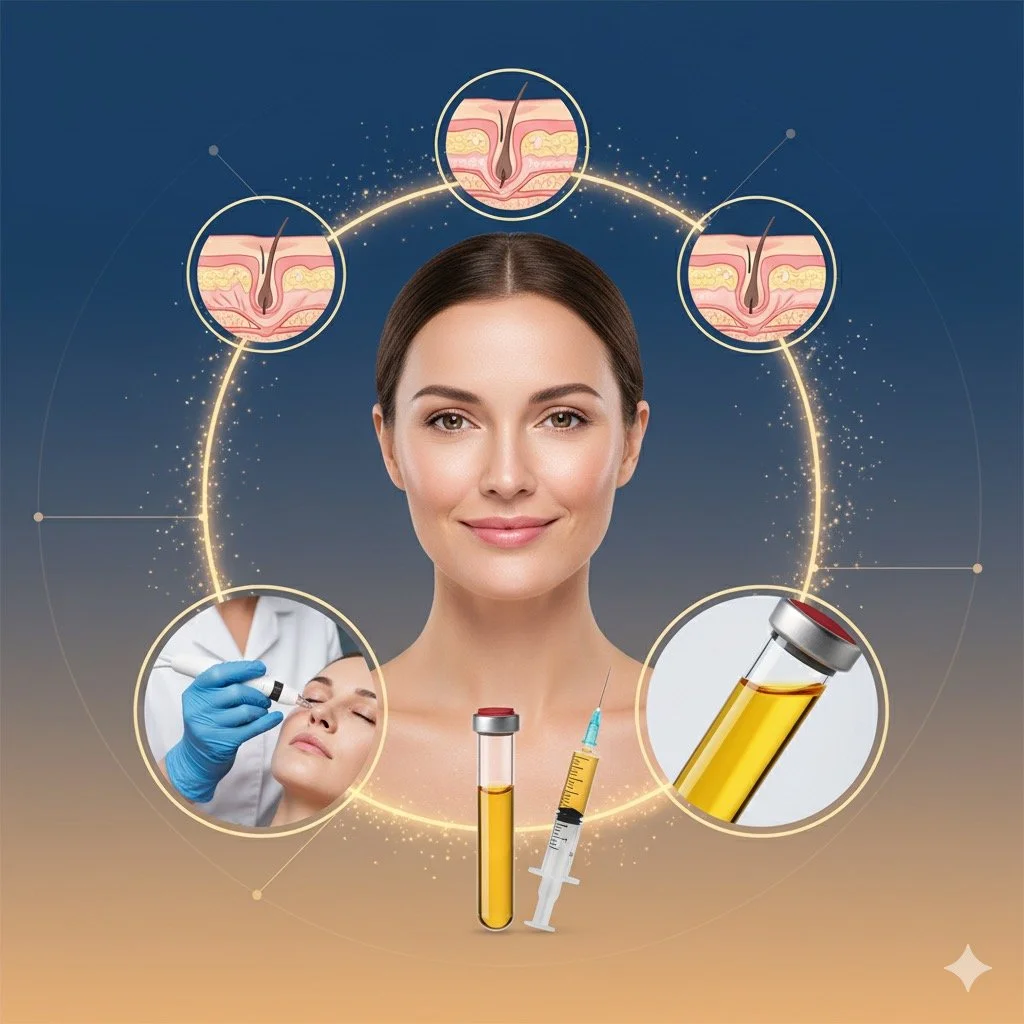
🩸 PRP (Platelet-Rich Plasma) Therapy for Skin 🩸
Price £180
Includes Micro-Needling & Medical Grade LED Light therapy
PRP therapy for skin uses the patient’s own blood to stimulate cellular regeneration, collagen production, and tissue repair. It is widely used in anti-aging, scar reduction, and overall skin rejuvenation.
Procedure Steps:
Phlebotomy – A small blood sample (typically 10–60 mL) is drawn.
Centrifugation – The blood is processed to separate platelet-rich plasma from red and white blood cells.
Activation – Platelets are activated, releasing growth factors and cytokines.
Delivery – PRP is administered to the skin via microinjections, microneedling, or combination therapiesdepending on the treatment goal.
Healing Response – Growth factors stimulate cell proliferation, angiogenesis, collagen production, and extracellular matrix (ECM) remodeling, resulting in improved skin quality.
🧬 Mechanisms of PRP on the Skin
PRP improves skin health through several cellular and molecular mechanisms:
Fibroblast Activation and Collagen Synthesis
PRP growth factors (PDGF, TGF-β, VEGF, IGF-1) stimulate fibroblasts to produce collagen type I and III.
Collagen improves skin elasticity, firmness, and structural integrity, reducing fine lines and wrinkles.
Elastin Production
PRP promotes elastin formation, contributing to skin elasticity and resilience.
Angiogenesis (Formation of New Blood Vessels)
VEGF in PRP stimulates capillary growth, enhancing blood flow, oxygen delivery, and nutrient supply to dermal cells.
Improves cellular metabolism and repair, supporting healthier skin at the microscopic level.
Cellular Proliferation and Tissue Regeneration
PRP promotes dermal and epidermal cell growth, improving skin texture, thickness, and regenerative capacity.
Anti-inflammatory and Immunomodulatory Effects
PRP reduces pro-inflammatory cytokines in the dermis.
Minimizes redness, irritation, and inflammation, which is especially helpful in acne-prone or sensitive skin.
Extracellular Matrix (ECM) Remodeling
PRP enhances ECM production, which supports skin architecture, improves elasticity, and maintains dermal volume.
Stem Cell Recruitment
PRP can attract and activate resident stem cells in the skin, which contribute to long-term regeneration and repair.
🌟 Clinical and Cosmetic Benefits of PRP for Skin
1. Skin Rejuvenation and Anti-Aging
Improves skin tone, texture, and elasticity.
Reduces fine lines and wrinkles, particularly around the eyes, forehead, and mouth.
Stimulates natural dermal remodeling, giving a youthful appearance without fillers or toxins.
2. Scar Reduction
Softens acne scars, surgical scars, or post-traumatic scars.
Promotes collagen remodeling and tissue repair, smoothing the skin surface.
Supports healing in stretch marks, improving skin texture and pigmentation.
3. Enhanced Healing and Recovery
Accelerates post-procedural healing (after laser resurfacing, chemical peels, or microneedling).
Reduces downtime, inflammation, and erythema, allowing patients to resume activities sooner.
4. Improved Hydration and Skin Quality
Enhances dermal hydration through ECM stimulation.
Results in plumper, softer, and more radiant skin.
Improves overall skin vitality and glow.
5. Pigmentation and Sun Damage
Can even out skin tone by promoting healthy epidermal turnover.
Reduces hyperpigmentation, age spots, and sun damage gradually over multiple sessions.
6. Minimally Invasive and Natural
Uses autologous blood, minimizing risks of allergic reactions, infection, or foreign body reactions.
Gradual, natural-looking results without overcorrection or artificial appearance.
🧑⚕️ Ideal Candidates for PRP Skin Therapy
Individuals with early signs of aging (fine lines, wrinkles, loss of elasticity).
Patients with acne scars, surgical scars, or stretch marks.
People seeking non-surgical skin rejuvenation.
Patients desiring natural, autologous treatments without synthetic fillers or toxins.
Those with dull, dehydrated, or sun-damaged skin.
⚠️ Treatment Considerations
Frequency: Typically 3–6 sessions spaced 4–6 weeks apart, followed by maintenance every 6–12 months.
Onset of Results: Subtle improvements may appear after 2–3 sessions, with full effects over 3–6 months.
Combination Therapy: PRP is often combined with microneedling, laser resurfacing, chemical peels, or mesotherapy for enhanced results.
Downtime: Minimal; mild redness, swelling, or bruising may occur at injection sites.
✅ Summary of Main Effects of PRP on Skin
PRP therapy stimulates cellular regeneration, collagen and elastin synthesis, angiogenesis, and ECM remodeling, leading to:
Skin rejuvenation: firmer, smoother, and more youthful appearance.
Scar and stretch mark improvement: smoother skin with reduced visibility of scars.
Enhanced healing: faster recovery post-procedure or injury.
Hydration and glow: plumper, radiant, and healthier-looking skin.
Pigmentation correction: gradual evening of skin tone and reduction of sun damage.
Natural and safe results: minimal risk due to autologous origin.
Overall: PRP is a minimally invasive, natural, and highly effective therapy for enhancing skin health, texture, and overall appearance by harnessing the body’s own growth factors and regenerative capacity.